


Jewelry can lose its shine over time. Even your favorite gold ring, silver necklace, or diamond bracelet can start looking dull, cloudy, or tarnished after regular wear. Sweat, oils, moisture, cosmetics, perfumes, and everyday exposure to air can all affect the appearance of jewelry.
The good news is that you don’t always need to visit a jeweler to bring back that beautiful shine. With the right approach and a safe jewelry cleaner, you can often clean and refresh your pieces at home.
In this guide, we’ll explain how to remove tarnish from jewelry at home, what cleaning methods work best for gold and silver, how to care for diamond jewelry, and what to look for when choosing a jewelry cleaning product.
What Causes Jewelry to Become Tarnished or Dull?
Before learning how to remove tarnish, it helps to understand why it happens.
Tarnishing is most commonly associated with silver jewelry, but other jewelry can also lose its brightness or develop surface buildup. Common causes include:
- Exposure to air and moisture
- Body oils and sweat
- Perfume and cosmetics
- Lotions and skincare products
- Household chemicals
- Dirt and everyday residue
- Improper storage
- Frequent handling
Silver is particularly prone to tarnishing because it can react with compounds in the air. Gold itself is relatively resistant to tarnishing, but gold jewelry can still become dirty, dull, or coated with residue.
Diamonds do not normally tarnish, but the metal surrounding them can become dirty, while oils can make the diamond appear less brilliant.
That is why choosing the right jewelry cleaner for the material is important.
How to Remove Tarnish From Jewelry at Home
If you’re wondering how to clean tarnished jewelry at home, start with the gentlest method appropriate for the piece.
1. Identify the Jewelry Material
Before applying any cleaner, determine whether you’re cleaning:
- Sterling silver
- Solid gold
- Gold-plated jewelry
- Platinum
- Diamond jewelry
- Gemstone jewelry
- Costume or fashion jewelry
Not every cleaning solution is suitable for every material.
For valuable, antique, heavily damaged, or delicate pieces, check the manufacturer’s care instructions or consult a professional jeweler before cleaning.
2. Remove Surface Dirt First
Loose dirt and oils can make jewelry look much duller than it actually is.
Use a soft, clean microfiber cloth to gently remove surface residue. Avoid rough towels or abrasive materials that could create scratches.
3. Use a Jewelry-Safe Cleaning Solution
For jewelry that is suitable for liquid cleaning, use a product specifically designed for jewelry rather than a harsh household chemical.
A quality jewelry cleaning solution can help loosen oils, dirt, and everyday buildup while making the cleaning process easier.
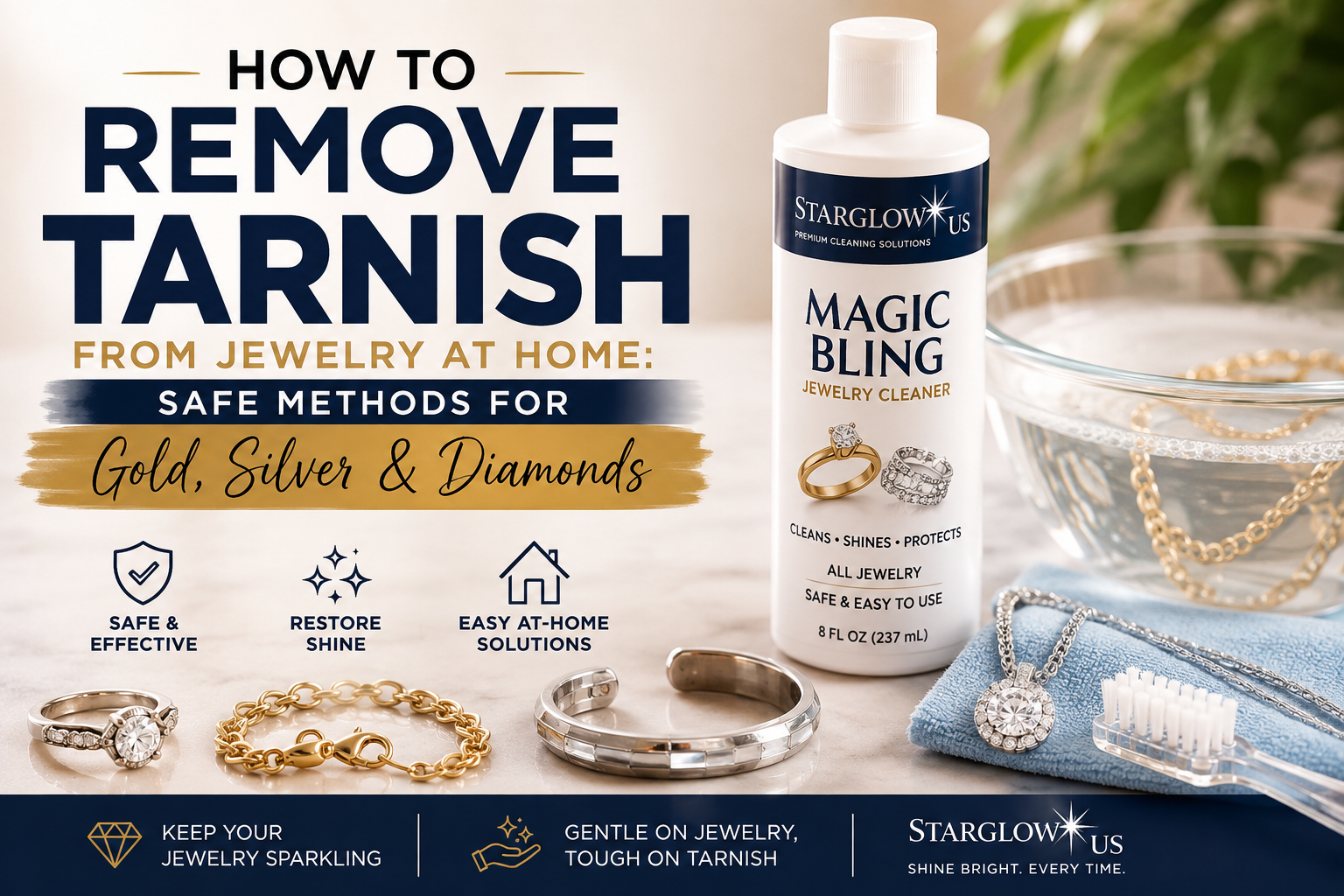
For people looking for a convenient option, Magic Bling Cleaner from StarGlow US can be considered as part of a regular jewelry-care routine. Always follow the product directions and confirm that the cleaner is appropriate for your particular piece.
4. Gently Clean the Jewelry
Use a soft jewelry brush or another non-abrasive tool to reach areas where dirt collects, such as:
- Under stones
- Around prongs
- Inside rings
- Chain links
- Bracelet connections
- Detailed settings
The goal is to remove buildup without aggressively scrubbing the jewelry.
5. Rinse and Dry Carefully
If the jewelry and cleaning product instructions allow rinsing, rinse thoroughly with clean water.
Then pat the piece dry with a soft, lint-free cloth.
Avoid putting jewelry away while it is still wet because moisture can contribute to tarnishing and residue buildup.
How to Clean Tarnished Silver Jewelry
Silver is one of the most common metals affected by tarnish.
If your silver jewelry has developed a yellowish, brown, gray, or black appearance, it may have tarnished due to exposure to air and moisture.
For how to clean silver jewelry at home, begin with a gentle jewelry-safe cleaning approach.
Simple Silver Jewelry Cleaning Steps
- Inspect the jewelry for stones or delicate components.
- Remove loose dirt with a soft cloth.
- Apply a suitable silver or jewelry cleaning solution according to its instructions.
- Gently clean the surface.
- Rinse if the product directions recommend it.
- Dry completely with a soft cloth.
- Store the jewelry somewhere clean and dry.
Avoid aggressive scrubbing. Heavy abrasion can change the surface appearance of jewelry and may damage delicate finishes.
For valuable or antique silver pieces, professional cleaning may be the safer option.
How to Clean Gold Jewelry Without Damaging It
Gold jewelry usually doesn’t tarnish in the same way as silver, but it can become coated with oils, lotion, soap, and dirt.
If you’re searching for how to clean gold jewelry at home, gentle cleaning is usually the best starting point.
Safe Gold Jewelry Cleaning Tips
- Use a jewelry-safe cleaner.
- Avoid abrasive powders and rough brushes.
- Don’t scrub aggressively.
- Pay attention to crevices and settings.
- Rinse only when appropriate for the piece and cleaner.
- Dry thoroughly before storing.
Gold-plated jewelry deserves extra care because aggressive polishing can wear away the plating over time.
If you are unsure whether a piece is solid gold, gold-filled, or plated, check its markings or manufacturer’s information before using a cleaning product.
How to Clean Diamond Jewelry at Home
Diamonds are durable, but diamond jewelry still needs proper care.
The stone itself may remain intact while oils and dirt accumulate on the surface, reducing its brilliance. The setting can also collect buildup around the stone.
When learning how to clean diamond jewelry, focus on gentle cleaning rather than aggressive polishing.
Diamond Cleaning Tips
- Use a cleaner suitable for diamond jewelry.
- Avoid harsh household chemicals.
- Use a soft brush around the setting.
- Don’t pull or push aggressively on the prongs.
- Rinse carefully if the cleaning instructions allow it.
- Dry with a soft microfiber cloth.
One important point: the diamond may be durable, but the surrounding metal and setting still require careful handling.
If the diamond is loose, the setting is damaged, or a prong appears weak, skip home cleaning and have the piece inspected by a professional.
What Is the Best Jewelry Cleaner for Tarnish?
The best jewelry cleaner depends on the type of jewelry you’re cleaning.
Instead of choosing a product simply because it promises a powerful shine, consider:
Material Compatibility
Check whether the cleaner is suitable for your jewelry’s specific material.
Cleaning Strength
A product should effectively remove everyday buildup without requiring harsh scrubbing.
Ease of Use
A simple cleaning routine is more likely to become a regular habit.
Instructions
Clear directions help reduce the risk of using a product incorrectly.
Intended Applications
Look for a cleaner designed for the types of jewelry you regularly wear.
For shoppers searching for a jewelry cleaner for tarnished silver, gold jewelry cleaner, or an easy at-home jewelry cleaning solution, comparing the intended use of each product is more useful than choosing based on marketing claims alone.
Why Avoid Harsh DIY Jewelry Cleaning Methods?
You’ll find plenty of DIY jewelry-cleaning recipes online. Some involve household ingredients or abrasive materials.
However, “natural” doesn’t automatically mean “safe for every piece of jewelry.”
Certain stones, finishes, plating, adhesives, and delicate settings may react poorly to aggressive cleaning methods.
Avoid experimenting on valuable jewelry without knowing how the material will respond.
In particular, be cautious with:
- Abrasive powders
- Strong acids
- Harsh chemicals
- Rough brushes
- Excessive scrubbing
- Unverified cleaning recipes
A jewelry-specific product with clear usage instructions can make the process more predictable.
How Often Should You Clean Your Jewelry?
There isn’t one cleaning schedule that works for everyone.
Jewelry worn every day may need more frequent cleaning because it is constantly exposed to skin oils, sweat, cosmetics, and environmental residue.
A practical routine could look like this:
Daily:
Remove jewelry before activities that expose it to chemicals, heavy moisture, or excessive dirt.
Weekly:
Wipe frequently worn pieces with a soft cloth.
As needed:
Use an appropriate jewelry cleaner when visible buildup or dullness develops.
Periodically:
Have valuable jewelry professionally inspected and cleaned when appropriate.
Regular maintenance can help prevent heavy buildup from becoming difficult to remove.
How to Prevent Jewelry From Tarnishing Again
Knowing how to remove tarnish from jewelry is useful, but preventing it can save you time.
Follow these simple jewelry-care habits:
Keep Jewelry Away From Chemicals
Remove jewelry before swimming, cleaning, applying certain beauty products, or using household chemicals.
Put Jewelry on Last
Apply perfume, lotion, and cosmetics before putting on your jewelry.
Keep Pieces Dry
Moisture can contribute to tarnishing, especially with silver.
Store Jewelry Properly
Keep pieces in a clean, dry jewelry box or pouch. Separate individual pieces to reduce scratching and tangling.
Clean Jewelry Regularly
Don’t wait until your jewelry becomes heavily coated with residue. Light, regular cleaning can make maintenance easier.
When Should You Avoid Cleaning Jewelry at Home?
Home cleaning isn’t appropriate for every piece.
Consider professional cleaning if your jewelry is:
- Extremely valuable
- Antique or vintage
- Heavily tarnished
- Set with delicate gemstones
- Showing loose stones
- Showing damaged or loose prongs
- Made with an unknown material
- Gold-plated with a worn surface
If you notice a loose stone or damaged setting, cleaning should not be the priority. The piece should be inspected first.
Choosing a Jewelry Cleaner: A Quick Checklist
Before buying a jewelry cleaning solution, ask yourself:
What material am I cleaning?
Gold, silver, platinum, diamonds, gemstones, and plated jewelry may have different care requirements.
Is the product designed for my jewelry?
Always check the product’s stated applications.
Is it easy to use?
A straightforward cleaning routine is ideal for regular maintenance.
Does it require aggressive scrubbing?
You generally want a cleaner that helps loosen buildup without excessive abrasion.
Can I use it as part of regular jewelry care?
A product that fits your routine is more useful than something you only use once.
Bring Back the Shine With the Right Jewelry Care Routine
Tarnished or dull jewelry doesn’t necessarily mean it’s permanently damaged. In many cases, everyday residue and tarnish can be managed with proper cleaning and storage.
The key is to understand your jewelry material, choose a suitable jewelry cleaner, and avoid cleaning techniques that could damage delicate surfaces.
For jewelry owners looking for a convenient cleaning option, StarGlow US offers products designed around keeping personal items and surfaces looking their best. Its Magic Bling Cleaner can be considered when you’re looking for a dedicated solution for jewelry care—just make sure the product is appropriate for your specific piece and follow the directions carefully.
Whether you’re trying to learn how to clean tarnished jewelry at home, searching for the best jewelry cleaner for gold and silver, or simply looking for an easier way to maintain your favorite pieces, a consistent and material-appropriate cleaning routine can help keep your jewelry looking bright and cared for.
Frequently Asked Questions
Can I remove jewelry tarnish at home?
Yes, many types of everyday tarnish and surface buildup can be managed at home using an appropriate jewelry cleaning product and gentle technique. However, valuable, antique, damaged, or delicate jewelry may require professional care.
What is the safest way to clean tarnished jewelry?
The safest approach depends on the jewelry material. Identify the metal and gemstones first, then use a cleaner specifically intended for that type of jewelry and follow its instructions.
What is the best jewelry cleaner for gold and silver?
There isn’t one universal cleaner that is best for every piece. Choose a product based on material compatibility, intended use, cleaning instructions, and the condition of your jewelry.
Can I use a jewelry cleaner on diamond jewelry?
Some jewelry cleaners are designed for diamond jewelry, but compatibility depends on the stone, setting, and surrounding materials. Always check the product instructions before use.
How can I keep silver jewelry from tarnishing?
Store silver jewelry in a clean, dry environment, limit exposure to moisture and chemicals, and clean it regularly using an appropriate silver or jewelry-care product.
Is Magic Bling Cleaner suitable for all jewelry?
Not necessarily. Jewelry varies significantly by material, finish, stones, and construction. Check the product’s current instructions and suitability before using it on a particular piece.
