


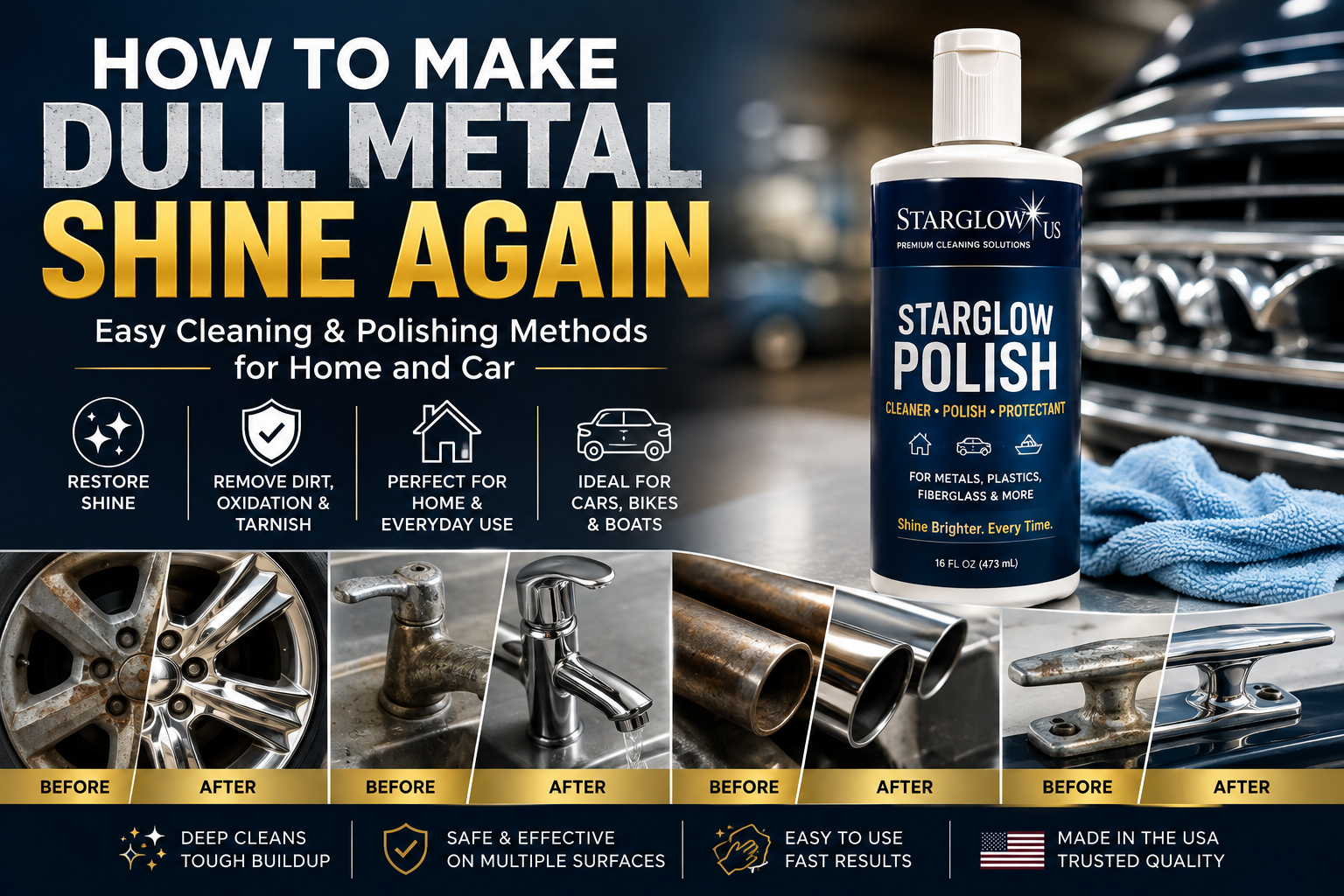
Dull metal can make an otherwise clean home, car, boat, motorcycle, or appliance look old and neglected. Over time, metal surfaces collect dirt, grease, oxidation, water spots, fingerprints, and other residue that can take away their natural shine.
The good news is that learning how to make dull metal shine again doesn’t always require professional detailing or expensive equipment. With the right metal cleaner, a suitable metal polish, and a little patience, many everyday metal surfaces can look noticeably cleaner and brighter.
In this guide, we’ll explain why metal becomes dull, how to clean different metal surfaces, when to use a metal cleaner versus a polish, and how products such as Starglow Polish from StarGlow US can fit into a regular cleaning routine.
Why Does Metal Become Dull?
Before choosing the best metal cleaner, it’s important to understand what causes metal to lose its shine.
Several factors can contribute to a dull appearance:
- Dirt and road grime
- Grease and fingerprints
- Oxidation
- Water spots and mineral deposits
- Salt and environmental exposure
- Soap residue
- Household cleaning chemicals
- Scratches and surface wear
- Long-term exposure to moisture
- Lack of regular maintenance
Cars and boats can experience additional exposure from road salt, rain, humidity, pollution, and outdoor conditions. Household fixtures may become dull from frequent handling, moisture, and cleaning products.
In many cases, the metal isn’t permanently damaged—it simply needs the right cleaning and polishing process.
How to Make Dull Metal Shine Again
If you’re searching for how to restore dull metal, start by identifying the surface and determining whether you need cleaning, polishing, or both.
Step 1: Identify the Metal Surface
Different surfaces require different levels of care.
Common examples include:
- Stainless steel
- Chrome
- Aluminum
- Brass
- Copper
- Metal fixtures
- Automotive trim
- Boat hardware
- Motorcycle components
- Appliances
Also check whether the surface has a coating, painted finish, plating, or protective layer. Aggressive polishing can damage some finishes.
Step 2: Remove Loose Dirt and Grime
Before polishing, remove surface dirt.
Use a soft microfiber cloth to wipe away dust and loose debris. For automotive surfaces, rinse or wash away loose road grime first.
This step matters because rubbing dirt across a metal surface can create additional scratches.
Step 3: Apply a Suitable Metal Cleaner
A metal cleaner is useful when the main problem is dirt, grease, residue, or general surface buildup.
Choose a product designed for the material you’re cleaning and follow its instructions carefully.
Avoid assuming that a product suitable for bare metal is automatically appropriate for coated, painted, plated, or specialty finishes.
Step 4: Use a Metal Polish When Appropriate
If the surface is clean but still looks dull, a metal polish may help improve its appearance.
A polish can be useful when you’re trying to:
- Restore surface shine
- Improve the appearance of dull metal
- Refresh metal trim
- Enhance chrome and metal surfaces
- Remove certain types of surface residue
- Maintain a polished finish
The right product depends on the material and condition of the surface.
Step 5: Buff With a Clean Microfiber Cloth
After applying the cleaner or polish according to the product directions, use a clean microfiber cloth to buff the surface.
Work in manageable sections rather than applying excessive pressure.
The goal is a clean, even finish—not aggressive scrubbing.
Metal Cleaner vs. Metal Polish: What’s the Difference?
One of the most common questions people have is whether they need a metal cleaner or a metal polish.
Although the terms are sometimes used interchangeably, they serve different purposes.
Metal Cleaner
A metal cleaner is primarily used to remove:
- Dirt
- Grease
- Grime
- Fingerprints
- General residue
- Surface contaminants
If the metal is dirty but still has a reasonably good finish, cleaning may be all you need.
Metal Polish
A metal polish is generally used when you want to improve the appearance of the surface after cleaning.
It’s particularly useful when metal looks:
- Dull
- Lifeless
- Cloudy
- Weathered
- Less reflective than before
For heavily neglected surfaces, cleaning first and polishing afterward can provide a better overall approach.
How to Restore Dull Stainless Steel
Stainless steel is common in kitchens, appliances, appliances, fixtures, grills, and commercial environments.
If you’re searching for how to make stainless steel shine again, start with gentle cleaning.
Stainless Steel Cleaning Tips
- Remove loose dust and debris.
- Clean away grease and fingerprints.
- Use a product appropriate for stainless steel.
- Follow the natural grain of brushed stainless steel when wiping.
- Avoid abrasive pads that can create visible scratches.
- Dry the surface after cleaning.
- Polish only when appropriate for the finish.
Avoid using rough materials simply because they seem effective. A scratched stainless-steel surface can be more difficult to maintain afterward.
How to Make Chrome Shine Again
Chrome is popular on cars, motorcycles, bathroom fixtures, appliances, and decorative hardware.
If you’re looking for how to polish chrome, begin by removing dirt and grime.
Simple Chrome Care
- Wash away loose dirt.
- Dry the surface.
- Inspect for rust, oxidation, or damage.
- Use a chrome-compatible cleaner or polish.
- Apply the product according to its instructions.
- Buff gently with a clean microfiber cloth.
Chrome can look dramatically better when maintained regularly, but heavily damaged or peeling chrome may require professional restoration rather than simply adding more polish.
How to Polish Metal on a Car
Automotive metal surfaces face some of the harshest everyday conditions.
Road grime, rain, salt, dust, pollution, and moisture can gradually reduce the appearance of metal and chrome components.
If you’re searching for metal polish for cars, don’t start by aggressively polishing everything.
Instead:
1. Wash the Vehicle
Remove loose dirt and road contaminants first.
2. Dry the Surface
Water can interfere with some cleaning and polishing products.
3. Inspect the Metal
Look for oxidation, scratches, rust, stains, or damaged coatings.
4. Choose the Correct Product
Use a product appropriate for the specific surface.
5. Apply in Small Sections
Work gradually so you can monitor the result.
6. Buff With a Clean Cloth
Remove remaining product according to the manufacturer’s instructions.
Regular maintenance can help prevent metal surfaces from becoming heavily neglected in the first place.
Can You Restore Dull Aluminum?
Yes, some dull aluminum surfaces can be improved with appropriate cleaning and polishing.
However, aluminum finishes vary considerably. Some are bare, brushed, anodized, painted, or otherwise treated.
Before using an aluminum polish, determine what type of finish you’re dealing with.
For bare aluminum, a suitable metal-cleaning or polishing product may help improve the appearance. For coated or anodized aluminum, aggressive polishing may damage the finish.
When in doubt, test the product on a small inconspicuous area first.
How to Restore Dull Brass and Copper
Brass and copper can develop discoloration and oxidation over time.
If you’re searching for how to polish brass or how to make copper shine again, start with gentle cleaning and identify the finish.
Decorative brass can be lacquered or coated, meaning aggressive polishing may not be appropriate.
For uncoated surfaces, an appropriate metal polish can help improve the appearance.
Always follow the manufacturer’s recommendations for valuable, antique, or specialty pieces.
What Is the Best Metal Polish for Home and Car Use?
The best metal polish isn’t necessarily the strongest product available.
A better approach is to choose a product based on:
Surface Compatibility
Make sure the product is intended for your specific metal and finish.
Type of Problem
Are you dealing with dirt, oxidation, water spots, dullness, or general surface residue?
Ease of Application
A product that is simple to apply and buff can make regular maintenance easier.
Intended Use
Consider whether you need a product for household metal, automotive surfaces, marine hardware, motorcycles, or another application.
Finish
Always consider whether the metal is bare, coated, painted, plated, brushed, or otherwise treated.
Why Choose a Multi-Surface Polish?
Many households and vehicle owners have several different surfaces that need regular care.
Instead of having a separate product for every small cleaning task, some consumers prefer versatile solutions that can be used across appropriate materials.
StarGlow US positions its cleaning products for multiple applications, including metals, plastics, glass, vehicles, boats, and household surfaces. Its Starglow Polish is offered in several sizes, from smaller bottles for touch-ups to larger options for more extensive cleaning needs.
For someone looking for a convenient metal polish for home and car, this type of versatility can be useful—provided the product is appropriate for the specific surface.
Starglow Polish: A Convenient Option for Metal Care
For people searching for an easy way to maintain dull metal, Starglow Polish by StarGlow US is one option to consider.
The brand describes its formula as American-made and designed for cleaning and restoring the appearance of metals and other surfaces. StarGlow US also states that its cleaning products are free from abrasives, acids, and ammonia.
Starglow Polish is available in multiple sizes, including 2 oz, 4 oz, 16 oz, and 32 oz options, allowing customers to choose according to their cleaning needs.
As with any surface-care product, always check the current product directions and confirm compatibility before applying it to a valuable, delicate, coated, or unfamiliar surface.
Common Mistakes When Polishing Metal
Want to get better results? Avoid these common mistakes.
Polishing Before Cleaning
Polishing over dirt can spread contaminants across the surface.
Using Too Much Pressure
Aggressive rubbing doesn’t necessarily produce a better shine and may damage some finishes.
Using the Same Product on Every Surface
A product that works well on one type of metal may not be suitable for another finish.
Ignoring Coatings
Painted, plated, anodized, or coated surfaces require extra caution.
Using Dirty Cloths
A dirty microfiber cloth can transfer grime back onto the surface.
Skipping a Test Area
When you’re unsure about compatibility, test a small hidden section first.
How to Keep Metal Shiny for Longer
Restoring metal is only half the job. Regular maintenance can help keep it looking better.
Clean Regularly
Don’t wait until dirt and grime become heavily built up.
Dry Metal After Washing
Moisture can contribute to water spots and oxidation on some surfaces.
Avoid Harsh Chemicals
Use products designed for the surface whenever possible.
Store Metal Items Properly
For tools, decorative pieces, hardware, and accessories, dry storage can reduce unnecessary exposure to moisture.
Maintain Your Vehicle
Regular washing and appropriate surface care can help automotive metal and chrome stay cleaner between detailing sessions.
Frequently Asked Questions
How do you make dull metal shiny again?
Start by removing dirt and residue with an appropriate metal cleaner. Once the surface is clean and dry, use a compatible metal polish if the finish allows it, then buff gently with a clean microfiber cloth.
What is the best way to restore dull metal?
The best method depends on the type of metal and its finish. Cleaning should generally come before polishing, and aggressive products should be avoided on delicate or coated surfaces.
Can I use metal polish on my car?
Some metal polishes are suitable for automotive metal and chrome surfaces. Always check the product instructions and confirm compatibility with the specific component before use.
How can I make stainless steel shine again?
Clean away grease, fingerprints, and residue using a suitable stainless-steel cleaner. Wipe with the grain and avoid abrasive materials that can scratch the surface.
What is the difference between metal cleaner and metal polish?
A metal cleaner primarily removes dirt, grease, and surface contaminants. A metal polish is generally used to improve the appearance and shine of a clean metal surface.
Can metal polish remove oxidation?
Some metal polishing products are designed to address certain types of oxidation or surface discoloration. Results depend on the metal, finish, and severity of oxidation.
How often should I polish metal?
There is no universal schedule. Polish when the surface becomes dull or when the product manufacturer recommends maintenance. Regular light cleaning can reduce the need for intensive polishing.
Final Thoughts
If you’re wondering how to make dull metal shine again, don’t assume that more scrubbing or a stronger chemical is the answer.
The better approach is simple: identify the surface, clean away contaminants, choose a compatible polish, and work gently.
Whether you’re maintaining stainless-steel appliances, chrome vehicle trim, aluminum components, brass fixtures, motorcycle parts, or other metal surfaces, the right cleaning routine can make maintenance easier.
For consumers looking for a versatile surface-care option, StarGlow US offers products such as Starglow Polish that are positioned for metal and other surface-care applications.
A little regular maintenance can go a long way toward keeping your metal surfaces cleaner, brighter, and ready to shine.
